
One of the most common questions I get asked is why I chose to be an indie writer versus going the traditional route. I will explain the process I went through in making my choice but please keep in mind, my choice may or may not be the right choice for you.
When I started writing Thorns of Deceit I was adamant I was going to find an agent and try to get picked up by a big publishing house. I had visions of getting a huge advance, being able to quit my job, and spending the day doing nothing but creating wonderful works. I am grateful for friends like Kim Roberts for keeping my feet a little more firmly on the ground.
But I did not just accept my friends’ advice I also did my own research. Writer’s Digest is a staple in my house. I so many articles in their online and print products. I ordered books (some of which I still have in my “to read” pile). I asked my writing mentors questions. And I queried agents. I cannot say 100% how many but I know it was less than 10. I even got a couple of nice email responses. As a frame of reference, James Patterson, Stephen King, John Grisham, and JK Rowling were all rejected by way more than 10 before they were finally picked up.
The following are things I considered when making my decision.
Creative Control
From the resources I had studied, if you are lucky enough to get an agent and they get you a big publishing house you may lose some creative control and in some instances screen rights. The house can tell you to change the title, character names, and even the ending. Thorns of Deceit and No Stone Unturned are personal to me. I am not ready to give up that level of control.
If those things are important for you to control, self-publishing may be the route to go. If you do get a contract with a publishing house make sure to read it through thoroughly and if you have the ability, have an attorney (or even just another set of trusted eyes) look it over. You don’t want to lose rights to the audio version or big screen.
Royalties
I’ll admit it – a big advance would be amazing! But, from everything I’ve read, the advances most places give out are not enough to live on. $5,000 or so. And you won’t receive any royalties from book sales until that has been paid back. And the splits are a little different. For example, with CreateSpace , Kindle Direct Publishing , and Draft2Digital the split is either 60/40 or 70/30 – with the author getting the higher percentage. Publishing houses typically do 25/75 with the author getting the lower percentage. And to get a big publishing house you must have an agent and they get their cut as well. If you want a hard cover (not just a soft cover) Barnes and Noble also has a self-publishing service. All of the services I listed allow you to publish your novel for FREE.
Marketing and Platform Development
As I’ve said in previous blog posts, marketing is the bane of my existence. It’s actually very hard work. I have found some tools that are helpful and make things a little easier but it’s still a lot of work. Here’s the thing, you have to do it. If you get a publishing house they are going to want you to have an established platform and to continue to do your own marketing. That is not to say they won’t do anything – but they won’t do everything. The advantage is their reach and distribution abilities are larger than the average new author.
Timing
Publishing with a house is a lengthy process. From the time you start until it’s on the shelves is a year or longer. I was not interested in waiting that long. It took me so long to finish the first novel that I didn’t really want to wait any long. I was ready to feel the book in my hands. And what a great feeling it was!
If you choose to go the route of self-publishing I have a few recommendations.
- Get a good editor. Seriously. This is critical! Find someone who isn’t afraid to tell you your baby is ugly and needs work. Find someone who will correct your spelling, grammar, and punctuation. Find someone who will tell you when things don’t flow well or make sense. You have put a lot of time, heart, and energy into your work. Having a good editor will only make it better.
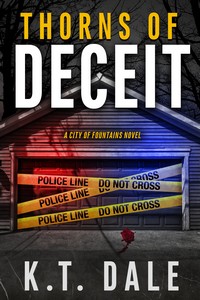 Get a good cover artist. We’ve all heard the saying “don’t judge a book by its cover” but we all do it. The cover is what catches our eye! One of the things I’ve heard several times is that my first book “looks like a real book.” When people hear “self-published” they sometimes assume that the book will look like something put together in a garage printing press. You want yours to look like Random House or Penguin published it. I have an amazing cover artist.
- Unless you are really good on the computer, hire someone to do the formatting for you. Again, it’s all about being professional. The cover artist I use also does formatting. Professionals know things we don’t think about. For example, I never thought about having all of my chapters start on the right page. The cover artist did. It’s the little things that make a difference.
After I published Thorns of Deceit, I started getting emails and phone calls from publishing houses. If this happens to you, make sure you get all the details before you sign any contracts. The consistent message among all the houses that contacted me was they wanted me to pay them. For a book I’d already published. They were going to put it through the editorial process, do different cover art, and help with distribution. All for the low-cost (with one house) of $3000. I politely declined. If you choose to use a small house that wants you to pay them, I suggest you do it before you have already spent the money on editing, cover art, etc.
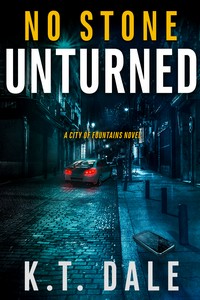 Choosing how to publish is a personal one. As I said, what works for me may not be right for you. Weigh your options and be open to both. I may choose to query agents again and trust me, if I get a call from Random, Penguin, or another big house I’ll jump at it. But for now, I’ll continue down the path I am on.
Well, holy crap,
You’re awesome.
I’ve always had a dim view of self publishing – even as a writer who’s never so much as seen a single word of his in print – because I’ve read so few well written self published books (present company excepted, of course).
And when they cite ‘creative control’, I don’t ever put much stock in it. It seems to me your choice is far more informed that simply creative control. Your choice is because it makes sense to you and those are the best kind.
One more question, though. And this is more of a nuts a bolts kind of thing, is have you ever mapped the effort that goes into each work? I mean, I’m in production control as a full time job and the first thing I always do is calculate the number of hours for each task, the cost per hour, in hopes that I at least break even. Does that kind of calculation come into play? I mean, it would never change my mind for wanting to write a novel (at this point, it’s a moral imperative) but being able to pay for a small celebration with the proceeds would be equally awesome. Maybe not an open bar, but maybe a DJ in a nice hall or something.
Thanks for this,
RAR
Thank you for commenting! I am glad the post provided some insight.
As for mapping my effort… I have not. I think calculating hours could be discouraging. What I do is calculate what I have spent for editing, cover art, etc and then take that from whatever I make in sales. For me that is how I determine whether I am in the red or starting to make a profit. I like the way you are thinking about having a celebration!